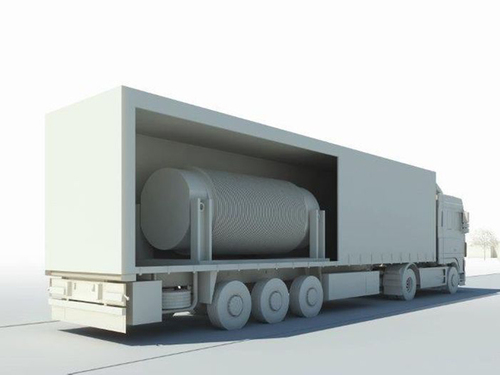
Transports
Radioactive material needs to be transported for a variety of reasons, including medical applications, the industrial use of nuclear energy and the disposal of the resulting waste, and the decommissioning of nuclear power plants.

Safety during transport
The safety and protection of people and the environment play a key role in the transport of radioactive substances. Many of these transports require a licence. BASE is responsible for authorising the transport of nuclear fuel and large radiation sources. The transport of contaminated large components must also be authorised as part of the decommissioning of nuclear power plants. BASE is also responsible for this. A licence is only granted if the transporter can demonstrate, among other things, that it complies with the legal requirements and has the necessary knowledge to transport the nuclear fuel, high-activity source or large component safely from one place to another. Once BASE has issued a transport licence, the carrier is responsible for the safety and execution of the transport.
The competent supervisory authorities ensure that the legal requirements for the safety of people and the environment are met. For the most common road transport operations, these are the state authorities designated by the federal states, and for rail transport, the Federal Railway Authority.
Once a licence has been issued and the first transport has taken place, BASE will make this known by publishing a list of current transport licences.